

Houston LAND ROVER Service Center
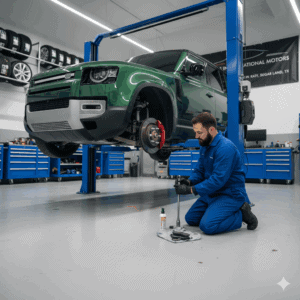 Whether you are navigating the bumper-to-bumper morning gridlock along the Katy Freeway, pushing your vehicle down the Grand Parkway in Katy, or taking a weekend cruise through the neighborhoods of Sugar Land, driving a Land Rover brings an incomparable mix of refined British comfort and all-terrain performance. However, keeping these high-end SUVs running smoothly in the oppressive 100°F+ Houston climate requires extreme vigilance, particularly over the engine’s thermal management system. Land Rover platforms—especially those powered by the ubiquitous 3.0L Supercharged V6 or 5.0L Supercharged V8 engines—are highly susceptible to sudden, catastrophic engine overheating triggered by localized cooling system breakdowns. At Texas International Motors, we serve as your premier independent dealership alternative, specializing in precise Land Rover coolant leak diagnostics and repairs. Armed with factory-grade pressure-testing arrays and diagnostic telemetry, our master technicians identify and permanently resolve weak links before a minor fluid drop mutters into a cracked cylinder head or a multi-thousand-dollar engine rebuild.
Why Land Rovers Lose Coolant in the Texas Climate
The core issue stems from Land Rover’s extensive use of molded plastic composite cooling parts tucked deep inside the engine valley. Subjected to the relentless ambient temperatures of Southeast Texas, combined with intense under-hood heat-soak, these components rapidly degrade, turn as brittle as eggshells, and fracture under pressure:
Plastic Front & Rear Crossover Pipes: Positioned directly beneath the supercharger, the factory front Y-tube and rear crossover pipe are notorious failure points. They typically crack at their molded seams, spraying coolant onto the engine block or slowly weeping down the rear firewall where the fluid burns off before ever creating a visible puddle on your garage floor.
Water Pump Bearing & Seal Failures: The mechanical water pump can develop axial play in its internal bearings, destroying the front seal and causing a steady, continuous loss of fluid behind the primary crank pulley.
Coolant Expansion Tank Micro-Fractures: Made of pressurized plastic, the reservoir tank easily develops hairline stress fractures along its base or near the return hose nipples, leading to a constant, recurring “Low Coolant” warning message on your dashboard.
| Observable Symptom | Probable Root Cause | Corrective Restoration Action |
| Sweet, Syrupy Smell After Parking | Hairline fracture in the plastic crossover pipes or hoses. | Supercharger removal, system line replacement, and pressure trace. |
| Low Coolant” Light / No External Puddle | Seep leaking from the rear heater manifold or firewall lines. | Dynamic UV-dye injection and deep engine valley inspection. |
| Coolant Pooling Near Front Pulley | Failed internal mechanical water pump seal. | Replacement with updated OEM water pump and upgraded gaskets. |
| Steam From Hood / Temp Gauge Spiking | Total pressure loss from a blown radiator hose or ruptured tank. | Immediate flatbed tow, comprehensive cooling block purge, and component renewal. |
Pro Tip: If your Land Rover is undergoing any top-end engine work that requires pulling the supercharger, do not replace the leaking components with the same factory plastic parts. At Texas International Motors, we strongly advise upgrading to aftermarket aircraft-grade aluminum front and rear crossover pipes. Reverting these highly problematic plastic parts to a durable, heat-resistant metal setup permanently isolates your engine from the leading cause of unexpected Land Rover breakdowns in Houston, completely eliminating the risk of plastic thermal failure down the road.
Is your Land Rover currently prompting a low coolant warning, or have you noticed a sweet smell coming from the engine bay after your commute?
Houston Land Rover Jaguar Maintenance
Failure of the timing chains causes the camshafts and crankshafts to go out of synchronization and lose power. As well as, causes the pistons and valves to slam into each other. So, this issue has the possibility of causing catastrophic engine failure.
The car manual states timing chain replacement should happen after the 150,000 mile mark. But, this issue has been affecting engines with lower mileage. So, we recommend timing chain replacement at your earliest convenience.
Houston Land Rover Suspension Compressor This compressor is the best replacement. But, will also require an update to software to the Suspension module. This is so the vehicle can accommodate the new style compressor.
Houston Land Rover Fuel Injector Maintenance
Land Rover fuel injectors are the most prone to clogging. Because, Land Rover fuel injectors are finely tuned to deliver a precise quantity of gasoline into your combustion chambers. In there, it is mixed with air and burned to generate the power your engine needs to run.
Land Rover fuel injectors should be maintained because faulty Land Rover fuel injectors can create serious fuel inefficiency. With the high price you’re already paying at the pumps, it makes sense to save money where possible.
The car manual states timing chain replacement at 150,000 miles. But, this issue is affecting engines with lower mileage. So, we recommend timing chain replacement sooner.
The car manual states timing chain replacement at 150,000 miles. But, this issue is affecting engines with lower mileage. So, we recommend timing chain sooner.












 Houston LAND ROVER Paint and Body Repair. So, typical problems occur when your Land Rover fuel injectors are clogged by your fuel filter. Additionally, clean Land Rover fuel injectors deliver a directed and measured fuel spray. But, dirty or clogged Land Rover fuel injectors spray fuel in several directions. You can keep your Land Rover fuel injectors cleaned with fuel injector cleaner in your gas tank. It is not necessary to use fuel injector cleaner with every fill-up. But, regardless of their cleanliness level, your Land Rover fuel injectors contain many tiny moving parts. So, that makes them subject to normal wear and tear.